


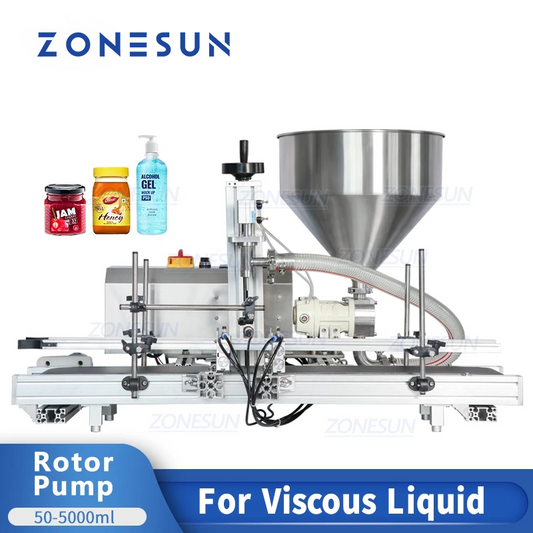
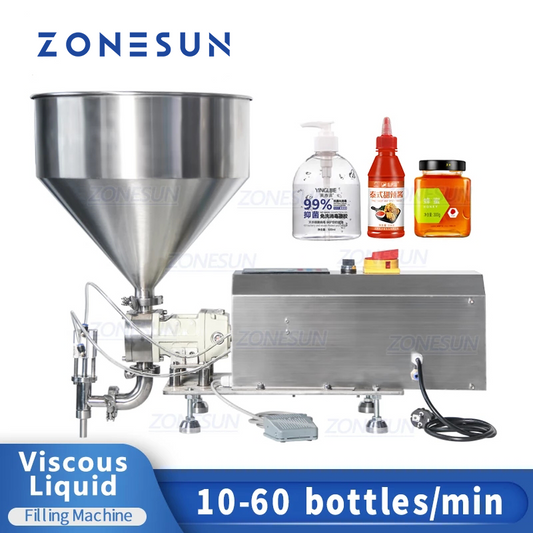
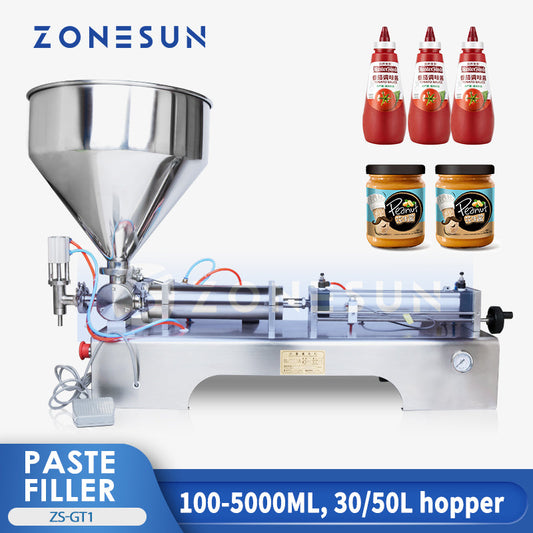
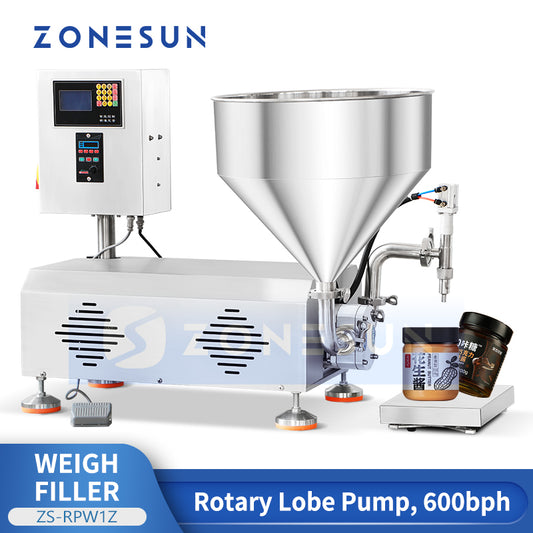





Pneumatic Piston Fillers
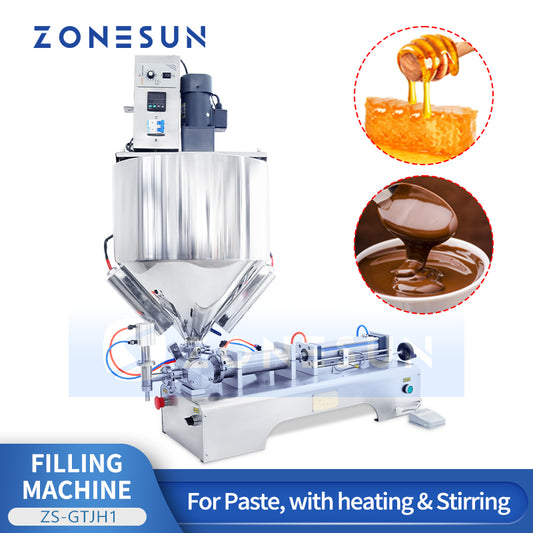
Simple and practical volumetric filling for creams, honey, sauces and similar viscous products in small or medium production batches.
Viscous Product Filling Solutions
Fill creams, lotions, sauces, honey, gels, waxes and other viscous products using equipment configured around product viscosity, filling temperature, particle size and container format. ZONESUN offers tabletop, semi-automatic and fully automatic paste filling machines with optional heating, mixing and bottom-up filling functions.
Controlled Dosing for Viscous Products
Paste filling performance depends on more than product thickness. Flowability, temperature, particle size, stringing, foaming and the container opening all affect the suitable pump, cylinder, nozzle and feeding method.
Simple and practical volumetric filling for creams, honey, sauces and similar viscous products in small or medium production batches.
Servo-driven piston movement provides programmable volume adjustment and controlled filling for different container sizes and products.
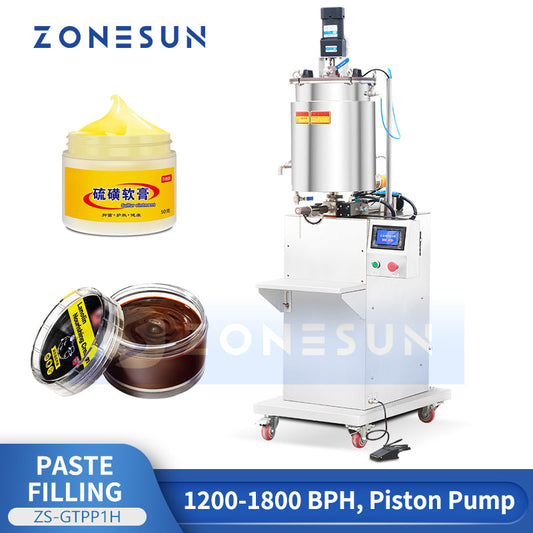
Jacketed hoppers, heated pipelines and optional mixing help keep wax, balm, Vaseline and temperature-sensitive products in a fillable state.
Multi-nozzle inline systems support higher output and can connect with container feeding, capping, labeling and end-of-line equipment.
Piston filling is commonly used for viscous products because it measures and pushes a controlled volume through the nozzle. Very thick or specialized products may require pressure feeding or a matched pump system.
Pneumatic piston fillers use compressed air to drive the filling cylinder. Servo systems use a servo motor for programmable piston movement, making volume and speed adjustment more convenient.
Heating may be required when a product solidifies or becomes too viscous at room temperature. Mixing can help maintain uniform temperature, color or suspended ingredients during filling.
Anti-drip shut-off nozzles, suck-back control, suitable nozzle diameter and optimized filling speed can help. Actual product testing is recommended for stringy or highly adhesive materials.
The nozzle enters the container and rises as the product level increases. This can help reduce splashing, trapped air, surface disturbance and uncontrolled product stretching.
A suitable machine can often handle multiple containers by adjusting filling volume, nozzle position, guides and conveyor settings. Change parts may be needed for significantly different packages.
Automatic paste fillers can connect with bottle unscramblers, capping machines, sealers, labelers, coders, cartoners and other equipment. Line speed and conveyor specifications must be coordinated.