








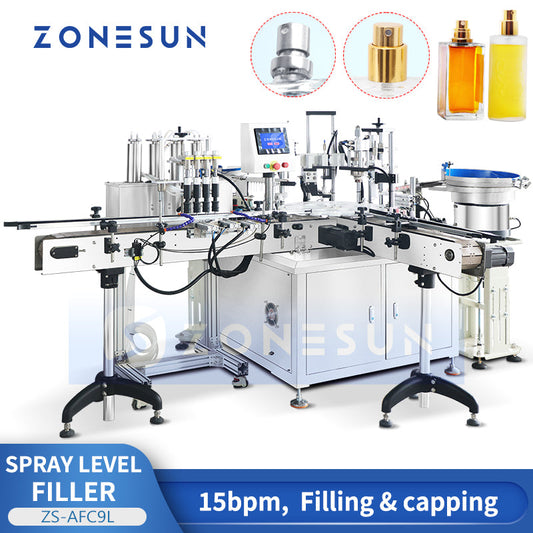
Compact Monoblock Machines
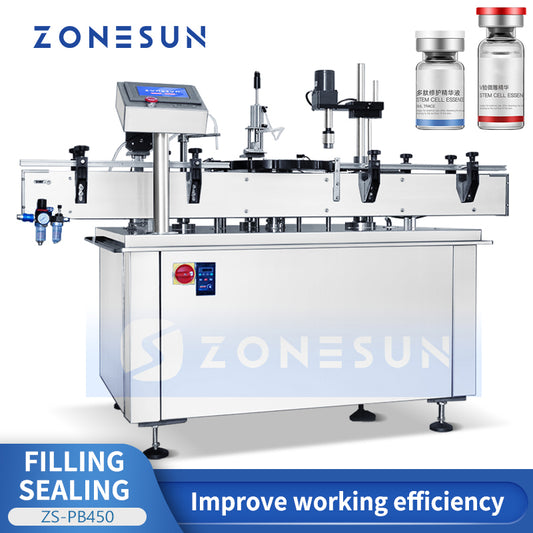
Combine filling, plug or cap placement and closing around a rotary indexing platform for small bottles, vials and compact production areas.
Integrated Container Closing Solutions
Combine product dosing, closure placement and controlled capping in one coordinated packaging system. ZONESUN filling and capping machines can be configured for liquids, pastes, powders and granules packed in bottles, vials, jars, tubes, cartridges and spout pouches with compatible screw caps, plugs, droppers, pumps and other closures.
Integrated Filling and Closing
A filling and capping machine coordinates container positioning, controlled product dosing, closure placement and final closing. Matching these operations within one system helps reduce container transfer, simplify production and maintain more consistent handling between filling and closure application.
Combine filling, plug or cap placement and closing around a rotary indexing platform for small bottles, vials and compact production areas.
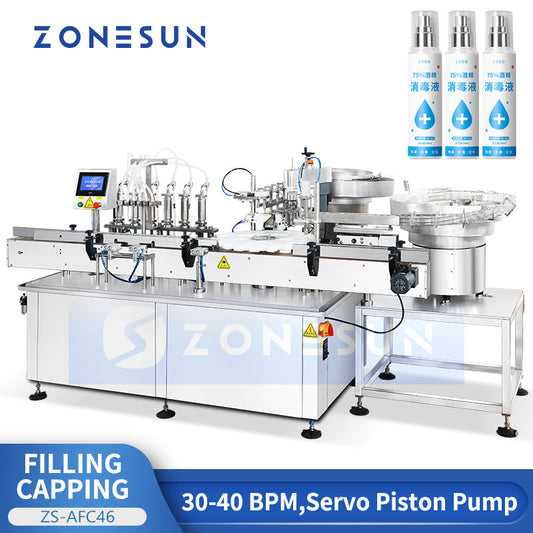
Transfer containers through separate but coordinated filling and capping stations connected by a continuous conveyor.
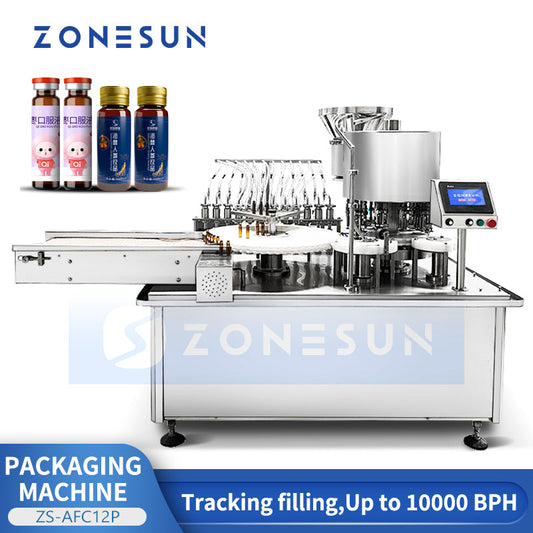
Use synchronized rotary stations for container feeding, filling and closing where higher output and controlled container handling are needed.
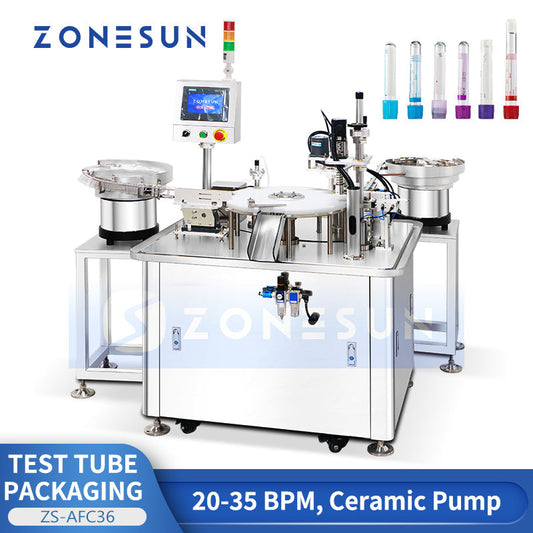
Configure filling and closing for droppers, nasal sprays, cartridges, spout pouches, tablet tubes, press caps and other specialized packages.
Closures are placed and tightened using chuck, spindle or application-specific rotary capping mechanisms.
Snap caps, plugs and other compatible closures are pressed into position using controlled vertical force.
Inner plugs, dropper assemblies, spray pumps or lotion pumps can require several placement and closing stations.
Compatible metal caps, perfume collars or vial closures are secured with application-specific crimping tooling.
| Comparison | Filling & Capping Monoblock | Connected Production Line |
|---|---|---|
| Machine Structure | Filling and closing functions are integrated around one compact machine platform. | Independent filling, capping and auxiliary machines are connected by conveyors. |
| Floor Space | Generally selected when compact layout and short container transfer are important. | Normally requires more floor space but allows more independent equipment arrangement. |
| Package Specialization | Well suited to defined bottles, vials, closures and coordinated multi-step assembly. | Offers flexibility when several independent machines or later expansion stages are required. |
| Additional Functions | May include filling, plug insertion, cap placement and capping. | Can add washing, drying, labeling, coding, inspection, cartoning and secondary packaging. |
It is an integrated machine or coordinated compact system that fills a product into a container and then places and closes the required cap, plug, dropper, pump or other compatible closure.
Monoblock means several packaging functions are combined around one machine platform. A monoblock may integrate container positioning, filling, plug insertion, cap placement and capping.
Many machines can be adjusted or fitted with change parts for several compatible bottle sizes. Large differences in bottle shape, neck, filling volume or closure may require separate tooling.
The filling section must match the product properties. Low-viscosity liquids may use peristaltic or magnetic pumps, while viscous products may require piston, rotor or gear-pump systems.
Yes. A suitable machine can include plug feeding, plug insertion, cap feeding and final capping as separate coordinated stations. Actual plugs and bottles are required for configuration.
Depending on the machine, closing force or torque may be adjusted through mechanical clutches, pneumatic pressure, servo control or application-specific capping heads.
Some compact systems may include labeling, while others discharge capped containers to a separate labeling machine. The suitable layout depends on label type, speed, container shape and available space.
Provide the product, viscosity or flow properties, filling volume, bottle dimensions, neck and closure samples, cap structure, required output, closing method, hygiene requirements and available factory space.