






Manual Capping Tools
Suitable for laboratories, product trials and very low-volume production where each closure is positioned and tightened by an operator.
SCREW CAPPING MACHINE GUIDE
A cap screwing machine tightens pre-threaded plastic or metal closures onto bottles and containers with controlled pressure and torque. It can be configured for standard screw caps, flip-top caps, spray caps, trigger pumps, lotion pumps and other compatible threaded closures.
Machine selection should be based on the cap structure, container stability, required output and cap-feeding method—not cap diameter alone. ZONESUN supplies compact, semi-automatic and fully automatic systems for standalone operation and complete packaging-line integration.
MACHINE CONFIGURATIONS
Choose a configuration that matches your production volume, container format and preferred level of operator involvement.
Suitable for laboratories, product trials and very low-volume production where each closure is positioned and tightened by an operator.
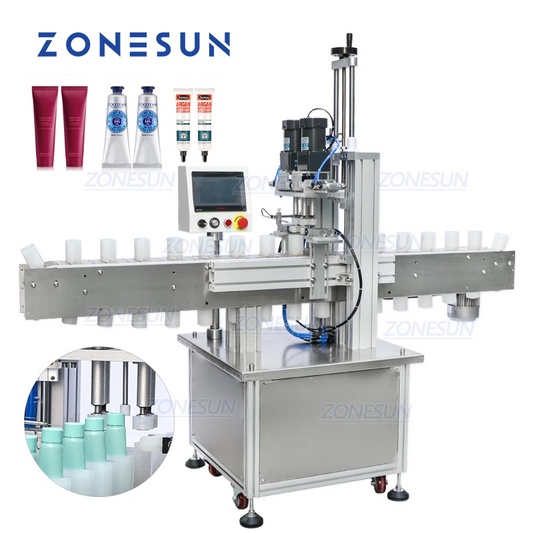
The operator places the bottle or cap while the machine completes tightening with more consistent torque and closure quality.
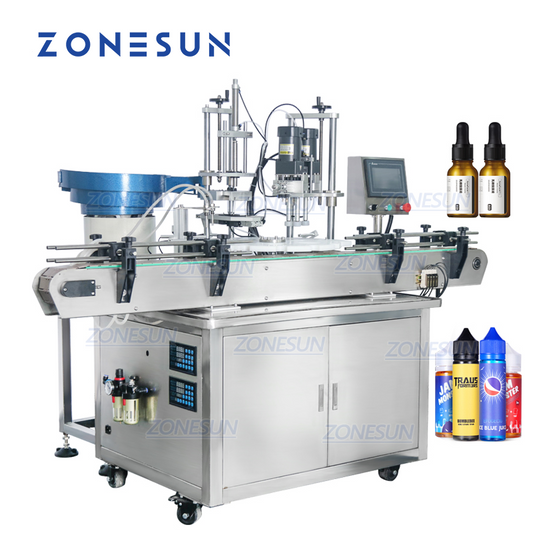
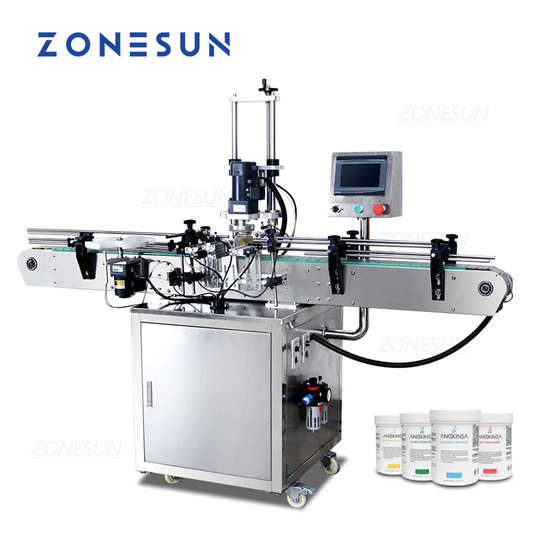
Designed for continuous bottle conveying, positioning and capping. Suitable for connection with filling, sealing and labeling equipment.
Combines cap sorting, feeding, placement and tightening to reduce manual handling in medium- and high-output packaging lines.
SELECTION FACTORS
Cap diameter, height, thread design, bottle shape and container stability determine the capping head and bottle-positioning structure.
Adjustable torque helps prevent loose closures, cap damage, thread stripping, product leakage and inconsistent finished packaging.
Production speed and available labor determine whether manual cap placement, a vibratory feeder or a cap elevator is more suitable.
COMMON APPLICATIONS
Screw capping systems are widely used with bottles and containers for food, beverage, cosmetics, pharmaceutical, household chemical and industrial products.
FREQUENTLY ASKED QUESTIONS
Some machines can handle multiple sizes through mechanical adjustment or interchangeable capping heads and positioning parts. The available range depends on the differences between your containers and caps.
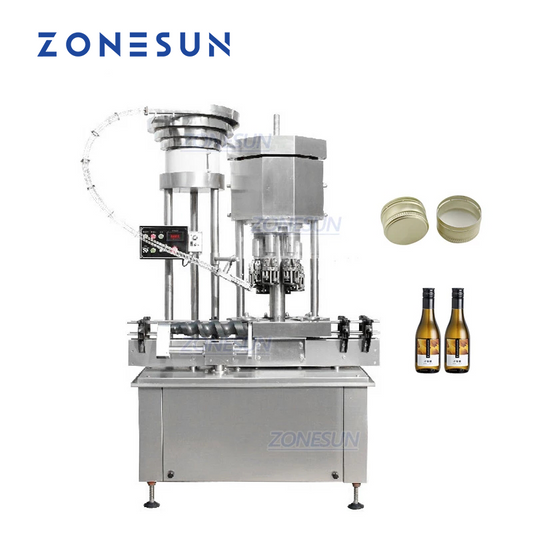
Screw capping tightens a pre-threaded closure onto a matching bottle neck. ROPP capping forms threads and a tamper-evident band on an aluminum closure during capping.
Yes, but long dip tubes and irregular pump shapes usually require specialized cap feeding, bottle positioning or manual placement before automatic tightening.
Yes. Automatic cappers can connect with bottle unscramblers, filling machines, induction sealers, labelers and collection conveyors. Conveyor dimensions and control signals should be confirmed during planning.
Samples allow the capping head, torque, cap feeding, bottle stability and finished closure quality to be tested before the final machine configuration is confirmed.
No. Manual cap placement can be economical for small production batches. Automatic feeding is more suitable when higher output and reduced operator involvement are required.
Accurate samples and production requirements help determine the suitable capping head, feeder and automation level.