




Chamber Vacuum Sealer
Places the complete bag inside a chamber before vacuum extraction and heat sealing.
Suitable for Meat, seafood, cheese, dried food and industrial partsVACUUM PACKAGING & SEALING SOLUTIONS
Remove air and seal bags, trays or rigid containers using vacuum packaging systems configured for different products and package sizes. ZONESUN provides chamber vacuum sealers, external suction machines, vacuum skin packaging, vacuum can sealing and automatic production systems.
VACUUM PACKAGING GUIDE
Vacuum sealing equipment removes air from a package before closing it. Depending on the machine configuration, the process may also include gas flushing, skin-film application, product compression, can seaming or continuous automatic bag handling.
MAIN MACHINE TYPES
Chamber size, package structure and automation requirements determine which type of vacuum equipment is suitable.
Places the complete bag inside a chamber before vacuum extraction and heat sealing.
Suitable for Meat, seafood, cheese, dried food and industrial partsUses an external nozzle to extract air from bags that may be too large for a conventional chamber.
Suitable for Bulk bags, powders, granules, rice and industrial productsCombines conveyor transfer, vacuum extraction and sealing for repeated or continuous packaging.
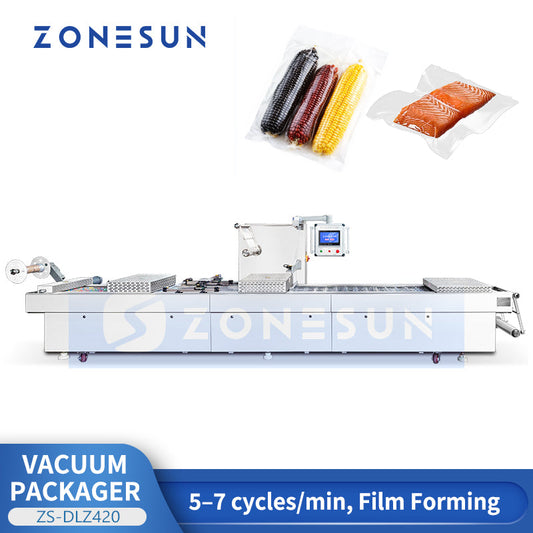
Suitable for Medium-output bag packaging and production line operationForms heated skin film closely around the product and tray or backing board.
Suitable for Fresh meat, seafood, cheese and retail display productsFeeds premade bags through filling, vacuuming and sealing stations for continuous automated production.
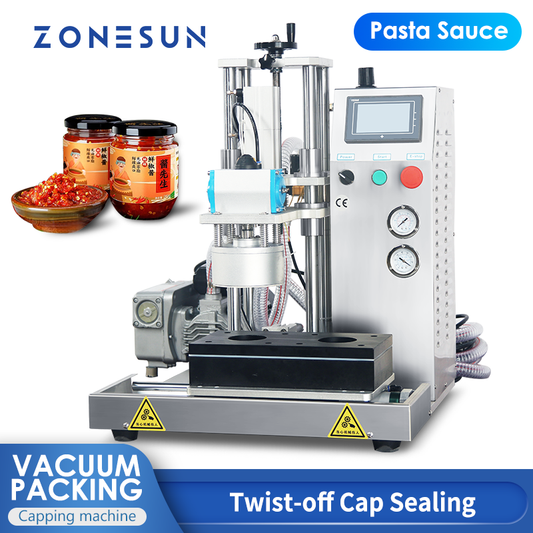
Suitable for Food, powders, granules and compatible premade pouchesRemoves air from rigid cans and may introduce nitrogen before applying or seaming the lid.
Suitable for Coffee, milk powder, nuts, canned food and dry productsPlace the product inside the bag, tray or container.
Position the opening at the chamber or sealing station.
Remove air according to the configured vacuum cycle.
Introduce configured protective gas where required.
Heat-seal the bag or apply the configured container closure.
Release and check the finished vacuum package.
SELECT BY PACKAGE
Use chamber, double-chamber or continuous vacuum sealers according to bag size and production output.
External suction machines avoid the dimensional limits of a conventional vacuum chamber.
Vacuum skin packaging requires compatible upper film, tray or backing board and product height.
Can applications require compatible lids, vacuum chambers and seaming or pressing mechanisms.
COMMON APPLICATIONS
MACHINE SELECTION GUIDE
Confirm the product, package and required vacuum process before selecting the machine structure.
Confirm whether the product is solid, liquid-containing, powder, granule, sharp-edged or easily compressed.
Supply bag, tray or can dimensions and the maximum dimensions after the product has been loaded.
Provide the bag or film structure, thickness, sealing layer and heat-sealing requirements.
Confirm vacuum-only, vacuum and gas flushing, skin packaging, compression or vacuum can sealing.
Required packs per minute determine whether a single chamber, double chamber or continuous automatic system is suitable.
Food applications may require stainless-steel construction, removable components and easy-clean working surfaces.
PROCESS OPTIONS
Removes air before heat sealing
Removes air and introduces configured gas
Forms film closely around the product
PACKAGING QUALITY
The required vacuum level depends on the product, package and acceptable compression.
Temperature, time and pressure must match the heat-sealing layer and material thickness.
Oil, liquid, powder or product residue around the bag opening can reduce seal consistency.
The bag, film, tray or can must be designed for the selected vacuum and sealing process.
PROJECT INFORMATION
Product and package samples help test air extraction, package compression, sealing parameters and the finished package before the final machine configuration is determined.
BUYING GUIDE
A chamber machine places the complete package inside the vacuum chamber. An external suction machine extracts air through a nozzle and is more suitable for some oversized bags.
Single-chamber machines suit smaller production. Double-chamber equipment allows an operator to load one chamber while the other completes its vacuum cycle.
Some liquid-containing products can be packaged using suitable chamber configurations and operating controls. Product behavior should be tested because liquids may move during air extraction.
Gas flushing can be configured on suitable machines. The gas, package material, target process and required residual oxygen should be confirmed.
Possible causes include a contaminated seal, unsuitable material, insufficient sealing parameters, bag damage or product edges puncturing the package.
Yes. Bag feeding, filling, vacuuming, gas flushing, sealing, coding, inspection and collection can be integrated according to the packaging process.