







Vacuum Emulsifying Mixers
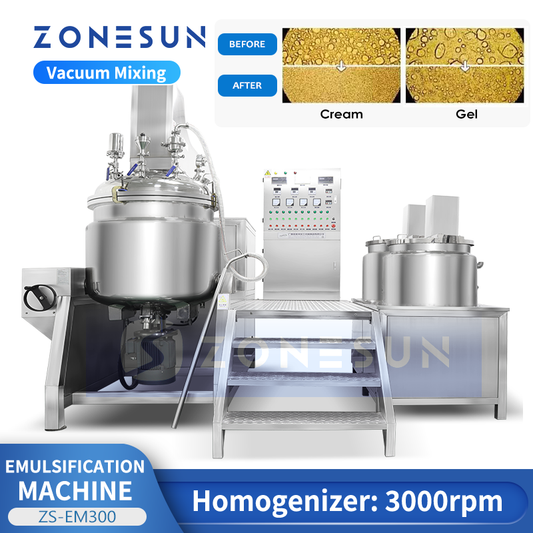
Combine mixing, homogenizing and vacuum processing for creams, lotions, ointments, sauces and other emulsified products.
Processing & Mixing Equipment
Explore homogenizers, vacuum emulsifying mixers, stainless steel mixing tanks and powder blending equipment for creams, lotions, sauces, ointments, liquids, pastes, powders and granules. Machine configuration can be selected according to the material, processing capacity, viscosity and required production process.
Get an Equipment RecommendationZONESUN provides industrial mixing machines for blending, emulsifying, homogenizing, dispersing, heating and processing liquid, paste and powder materials. Our range includes stainless steel mixing tanks, vacuum emulsifying mixers, high-shear homogenizers, powder blenders, laboratory dispersers and food cooking mixers. Tank capacity, mixing structure, contact materials, heating method and control system can be customized according to your production requirements.

Material Storage Tank Category Description The Material Storage Tank series is designed...

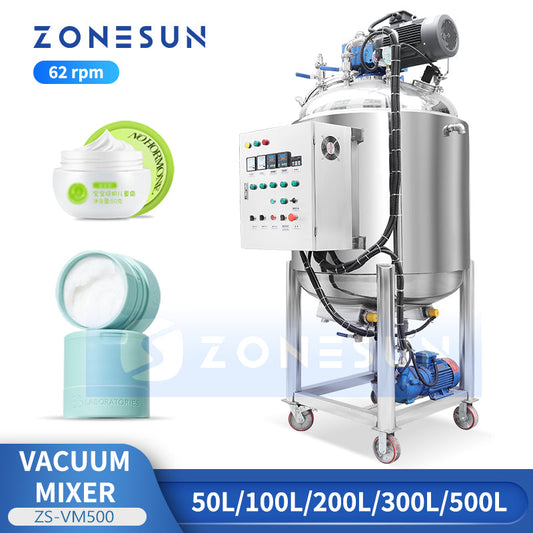
ZONESUN industrial mixing machines are designed for liquid, cream, paste, powder and...

The Blending Machine series is designed for efficient industrial mixing of powders,...

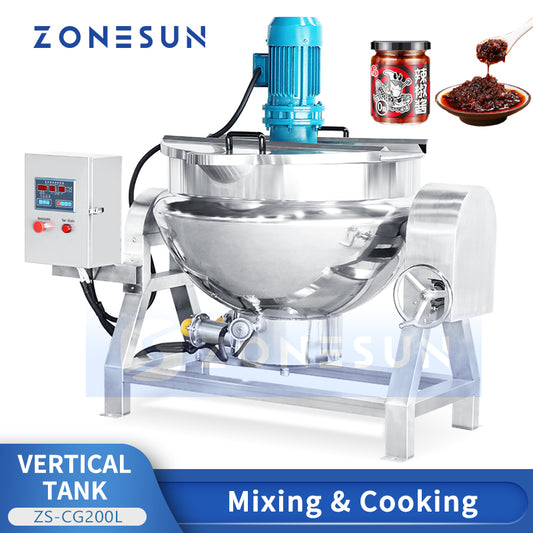
The Zonesun Commercial Cooking Tank collection delivers high‑performance, versatile cooking and processing...

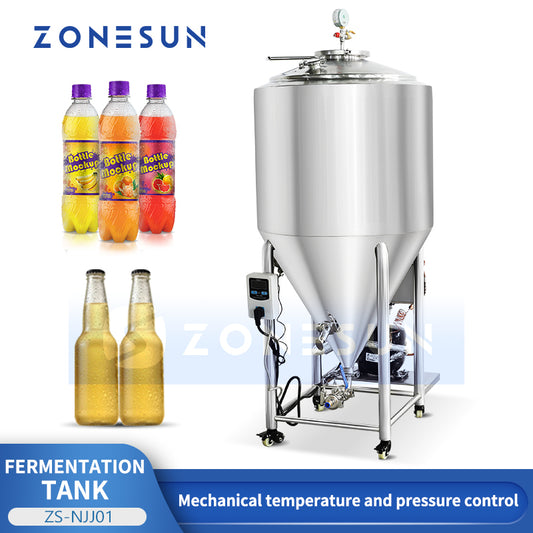
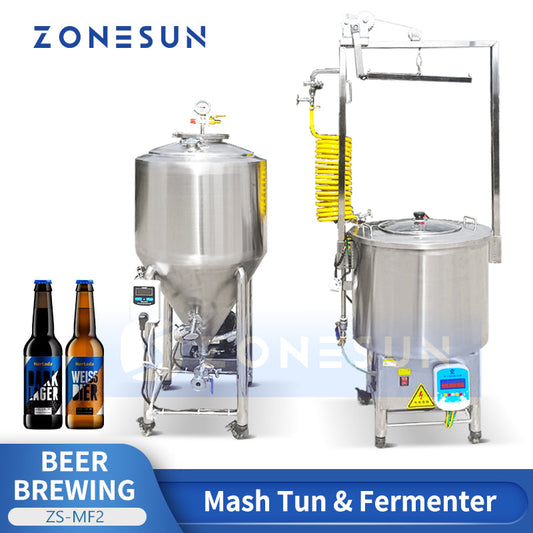
Fermentation Tank Category Description The Fermentation Tank series is designed for controlled...
Processing Equipment Selection Guide
The appropriate processing machine depends on the material state, viscosity, batch size, particle size and required finished-product texture. A complete configuration may combine slow-speed mixing, high-shear homogenizing, vacuum deaeration, heating, cooling, scraping and material transfer functions.
Combine mixing, homogenizing and vacuum processing for creams, lotions, ointments, sauces and other emulsified products.
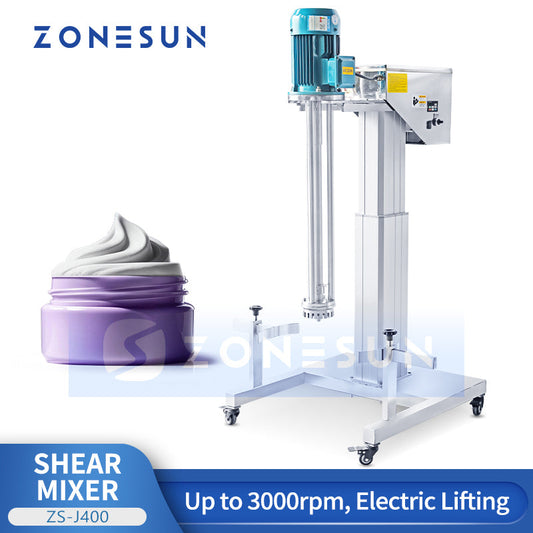
Apply high shear to disperse, emulsify and reduce material particle or droplet size within suitable formulations.
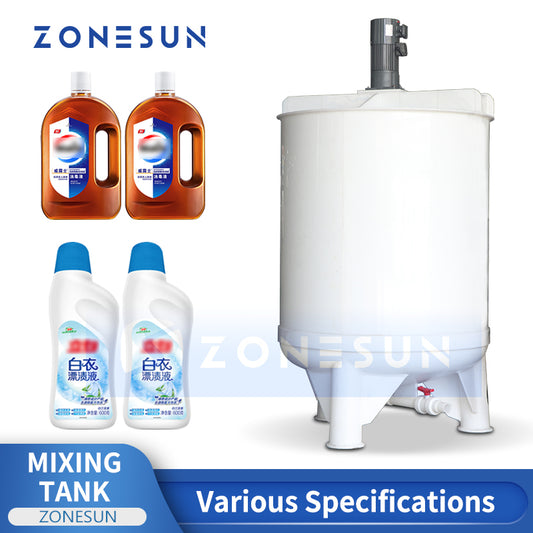
Used for liquid and paste preparation with configurable tank volume, agitator structure and discharge method.
Combine controlled heating and agitation for materials requiring melting, dissolution or temperature-controlled processing.
Blend dry powders or granules using machine structures selected according to material flowability and batch requirements.
Suitable for formulation trials, sample preparation, process development and small-batch material testing.
The exact sequence depends on the formulation and machine configuration. Heating, vacuum and cooling are optional processes and should be confirmed according to the material.
These processes perform different functions. Conventional mixing combines ingredients and maintains product uniformity. Homogenizing applies higher shear for finer dispersion. Emulsifying is used to form and stabilize mixtures of normally immiscible phases, such as oil and water.
Material state, viscosity, density, particle size and formulation.
Required batch volume, usable capacity and batches per production day.
Mixing, scraping, homogenizing, vacuum, heating and cooling.
Outlet structure, transfer pump, piping and filling-line connection.
Please provide the material name, formulation or ingredient characteristics, viscosity, batch capacity, processing temperature, required texture and expected production output.
Tank volume normally refers to the total internal capacity. Working volume is the practical amount processed while allowing space for mixing movement, foam and material expansion.
It may be considered when a formulation requires controlled emulsification, high-shear homogenizing and reduction of entrained air. Suitability depends on the material and process.
Heating and cooling functions can be configured on suitable jacketed tanks. The required temperature, heating method, cooling medium and available utilities should be confirmed.
Yes, suitable systems can transfer processed material to a storage tank or filling machine through piping and a transfer pump. Material viscosity, transfer distance and outlet position should be evaluated.
Send your material, batch capacity and processing requirements.