



Liquid Food & Edible Oil
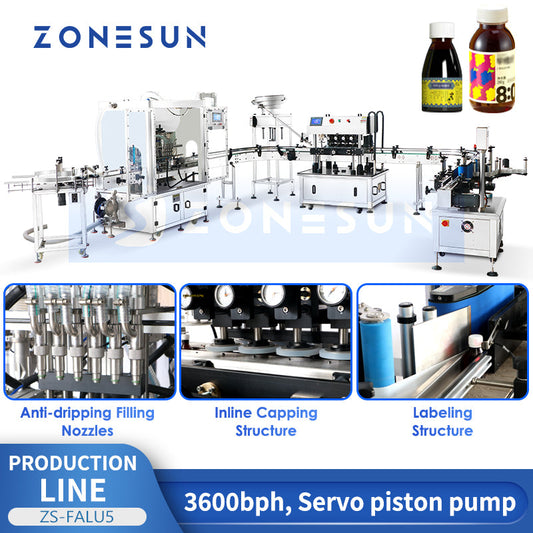
Filling systems for cooking oil, vinegar, soy sauce, juice, milk and other free-flowing liquid foods in bottles, jars or rigid containers.
Integrated Food Packaging Solutions
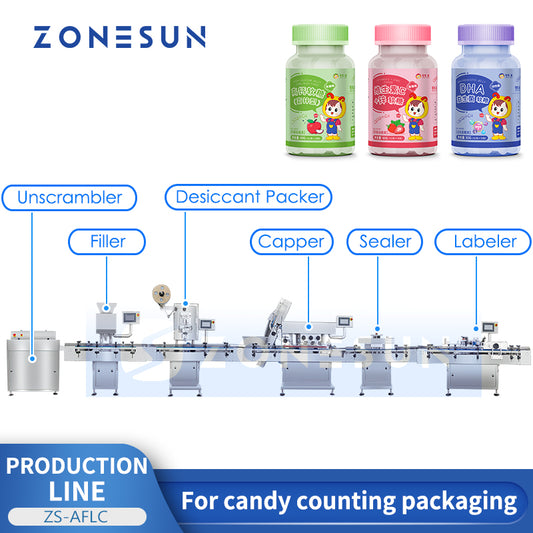
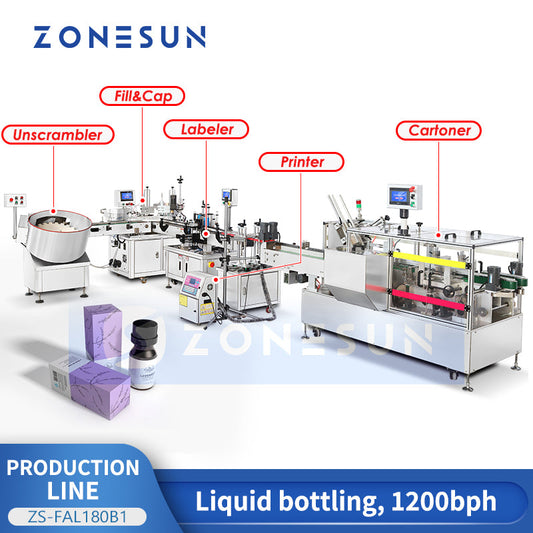
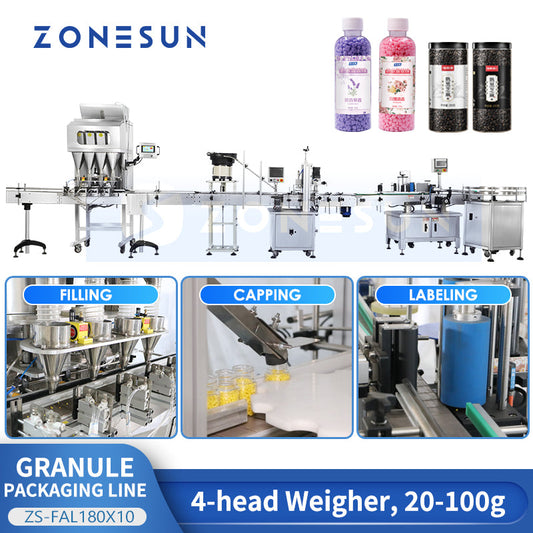
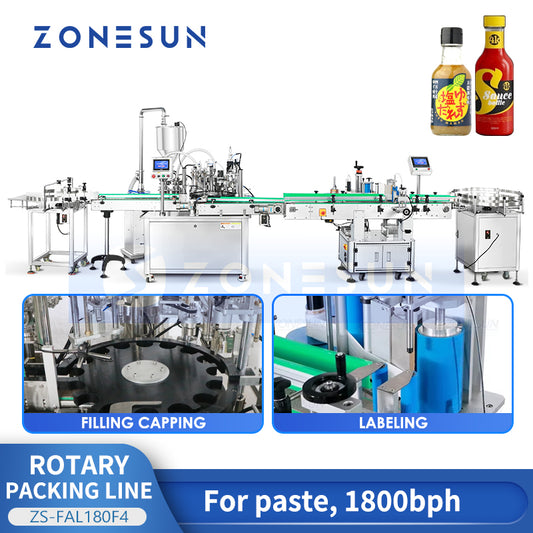
Explore integrated packaging equipment for edible oil, sauces, pastes, honey, jam, foods containing particles, powders, granules and pouch-packed products. ZONESUN systems can combine material handling, filling, capping, sealing, labeling, coding and end-of-line packaging according to your product, container and required production capacity.

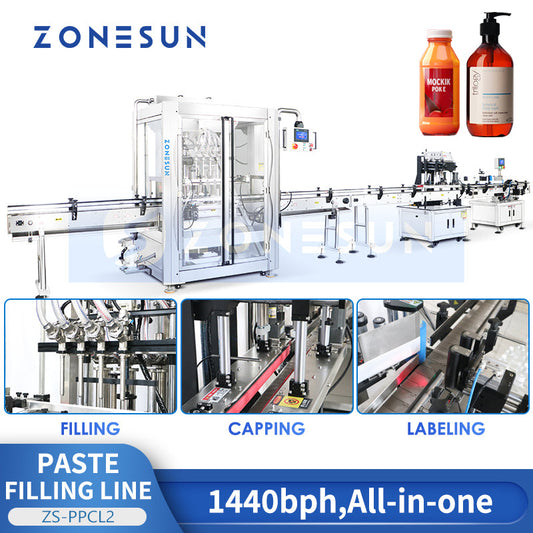
For ketchup, mayonnaise, chili sauce, dressings and other viscous food products.

For cooking oil, vinegar, juice, milk and other free-flowing liquid foods.

For honey, jam, fruit preserves and other thick, sticky food products.

Flexible pouch filling and sealing solutions for liquids, powders, granules and prepared foods.

Designed for chili crisp, chunky sauces, fruit mixtures and products containing solid pieces.

For flour, milk powder, coffee, grains, rice, spices and other dry food products.
ZONESUN provides customized food packaging lines integrating mixing, filling, capping, sealing, labeling and secondary packaging processes. Our solutions are designed for sauces, ketchup, honey, jam, edible oil, condiments and other liquid or viscous food products.
From Product Handling to Final Packaging
Food products differ in viscosity, particle size, flowability, temperature and hygiene requirements. A suitable packaging line should be configured around the actual material, target filling volume, container, closure and required output rather than using one filling method for every product.
Filling systems for cooking oil, vinegar, soy sauce, juice, milk and other free-flowing liquid foods in bottles, jars or rigid containers.
Piston, pump or pressurized filling solutions for ketchup, mayonnaise, chili sauce, salad dressing, curry paste and other viscous foods.
Controlled filling equipment for sticky or temperature-sensitive products, with optional heating, mixing and anti-drip filling functions.
Filling solutions designed around sauces, prepared foods or pastes containing fruit pieces, vegetables, meat particles or other inclusions.
Auger, volumetric-cup and weighing systems for flour, seasoning, milk powder, coffee, sugar, grains, nuts and snack products.
Vertical form-fill-seal and premade-pouch systems for liquids, sauces, powders, granules and foods requiring flexible bag packaging.
The appropriate system depends on viscosity, temperature and whether the sauce contains particles. Piston or suitable pump fillers are commonly considered for thick sauces, while particulate products require an adequate product passage and filling-valve design.
A line may handle multiple products when their characteristics and cleaning requirements are compatible. Filling parameters, product-contact components and changeover parts may need to be adjusted or replaced.
Yes. The particle size, concentration and distribution should be tested before selecting the pump, cylinder, valve and nozzle. Oversized product passages can help reduce blockage and product damage.
Heating and mixing can be added for products that must remain warm, uniform or fluid during filling, such as honey, jam, chocolate, viscous sauces and products containing suspended ingredients.
Bottle lines normally use container feeding, filling, capping and labeling equipment. Pouch systems form or feed bags before filling and heat sealing, so the conveying, dosing and closing mechanisms differ substantially.
A complete system can be configured with preparation tanks, feeding, filling, capping or sealing, labeling, coding, inspection, cartoning and end-of-line packaging according to the product and output.
Useful information includes product samples or videos, viscosity and particle size, filling volume, container and closure dimensions, package drawings, target output, voltage and available factory space.