


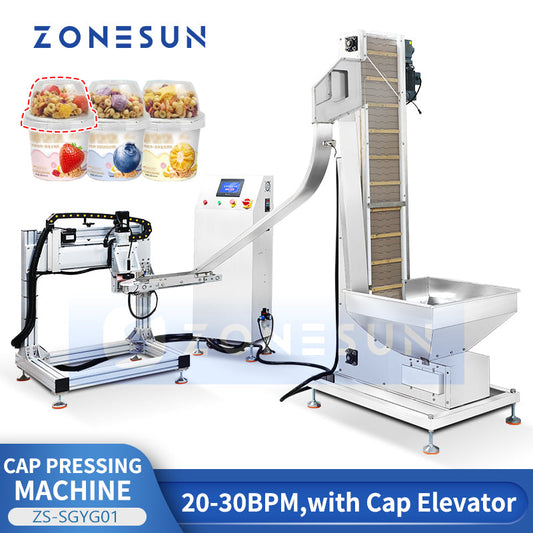


Bottle Cap Pressing
For plastic or metal caps secured by direct downward pressure, including snap-fit lids and compatible dust covers.
PRESS-ON CLOSURE SYSTEMS
Apply press-on caps, snap-fit lids, dust covers, wooden corks and compatible closures using controlled downward pressure. Choose from compact, pneumatic and fully automatic systems with optional cap feeding and production-line integration.
CAP PRESSING GUIDE
A cap pressing machine applies downward force to secure press-on caps, snap-fit lids, dust covers, plugs, wooden corks and other non-threaded closures. Unlike a screw capper, the machine does not rotate the closure during application.
The correct configuration depends on the closure structure, required pressing force, container strength, bottle stability and production speed. Closure and container samples are recommended before selecting a pressing head or feeding system.
CLOSURE APPLICATIONS
ZONESUN pressing systems can be customized around the closure shape, container format and required automation level.
For plastic or metal caps secured by direct downward pressure, including snap-fit lids and compatible dust covers.
Designed to feed, position and press wooden or synthetic corks into compatible wine, beverage and specialty bottles.
For yogurt cups, food containers, plastic buckets and larger lids requiring controlled vertical or belt pressing.
Customized for perfume covers, inner plugs, pocket perfume caps and closures requiring shaped pressing tools.
SELECTION FACTORS
The cap profile, insertion depth and locking structure determine the pressing head, guide and positioning parts.
Force and pressing height must secure the closure without deforming the cap, damaging the neck or crushing the bottle.
Required speed determines whether closures should be placed manually or supplied by a vibratory feeder or cap elevator.
CAPPING METHOD
Confirm whether the closure is secured by downward pressure or by threads. These two closure methods require different capping heads and operating actions.
FREQUENTLY ASKED QUESTIONS
Some machines can handle several sizes through height adjustment and interchangeable pressing heads, guides or positioning parts. The available range depends on the differences between the closures and containers.
Many pneumatic and automatic systems allow pressing force, pressure or height to be adjusted. The exact adjustment method depends on the machine configuration.
Yes. Compatible corks can be sorted and supplied using a customized feeder before they are positioned and pressed into the bottle neck.
Yes. Large bottles, buckets and pails may require reinforced conveyors, pneumatic pressing or continuous belt pressing according to the lid and container size.
Samples help verify the required force, pressing depth, closure positioning and container resistance before the pressing head and machine structure are finalized.
Yes. Automatic press cappers can connect with filling, sealing, labeling and conveying equipment. Conveyor height, operating speed and control signals should be confirmed.
Samples help confirm the pressing head, required force, closure feeder and suitable level of automation.