







Free-Flowing Liquid Lines
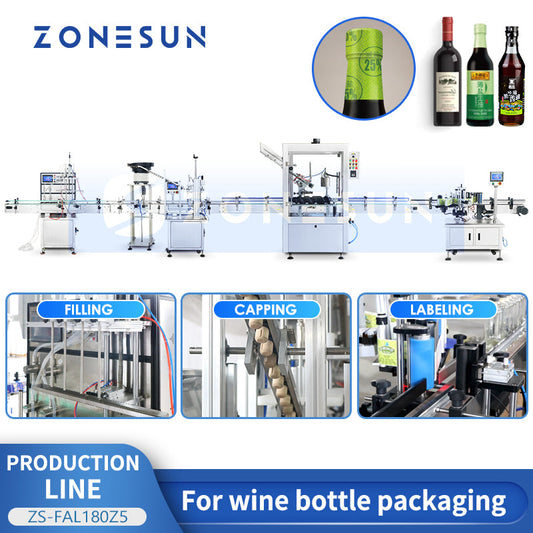
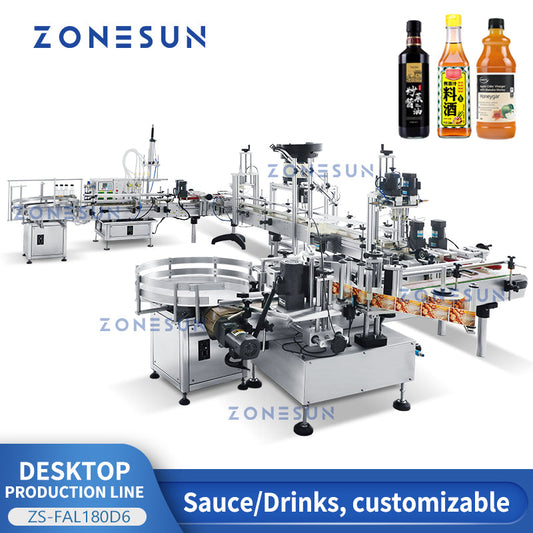
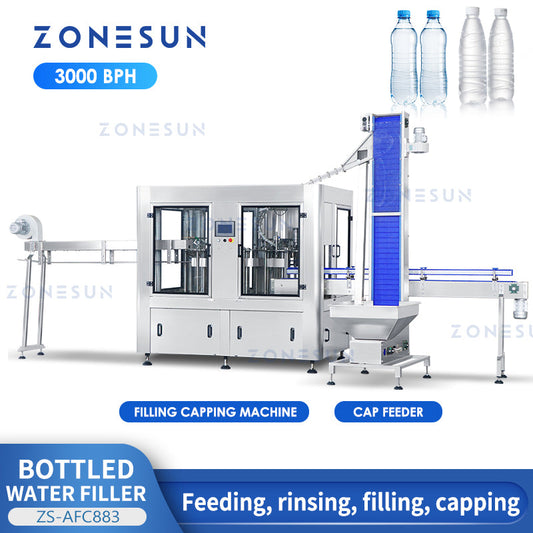
Gravity, flow-meter, magnetic-pump or other suitable fillers for water, juice, wine, vinegar, cosmetic water and similar liquids.
Integrated Bottle Packaging Solutions
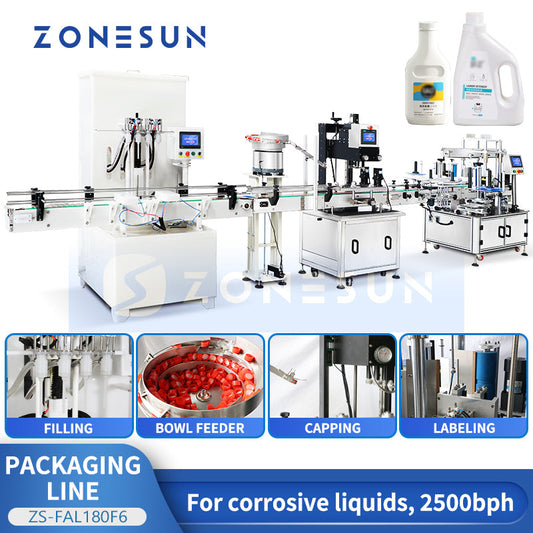
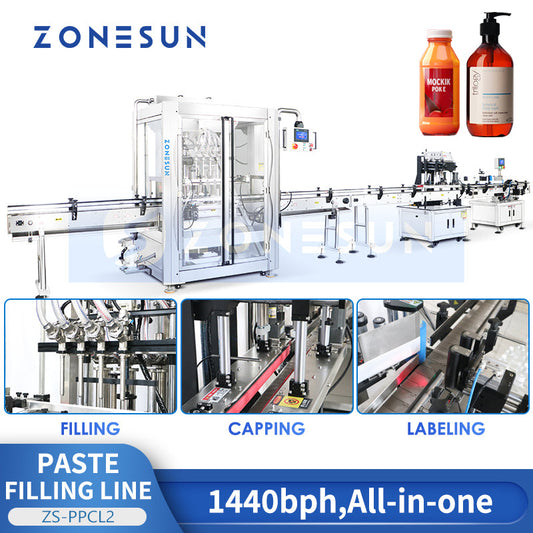
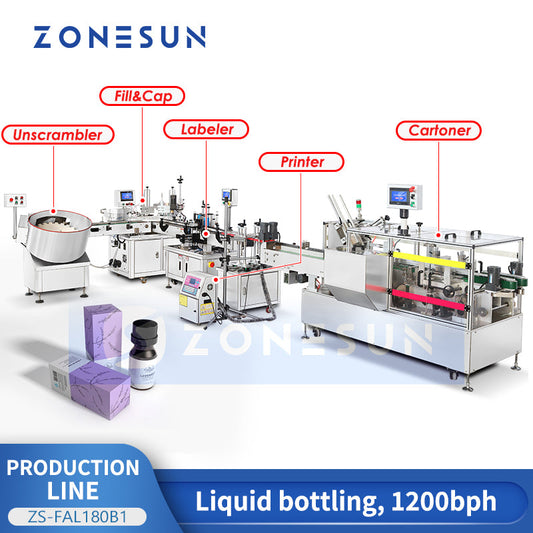
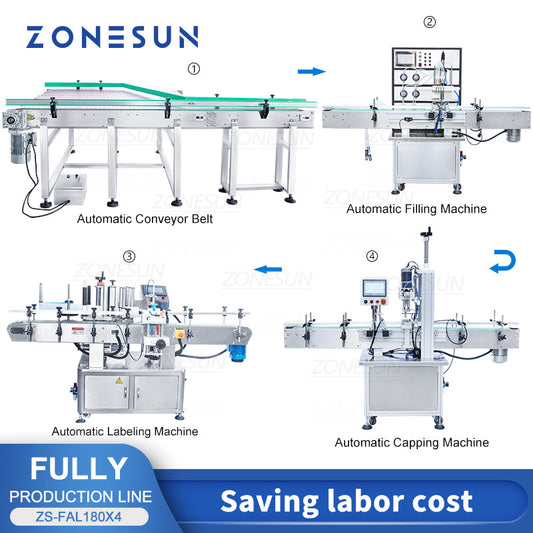
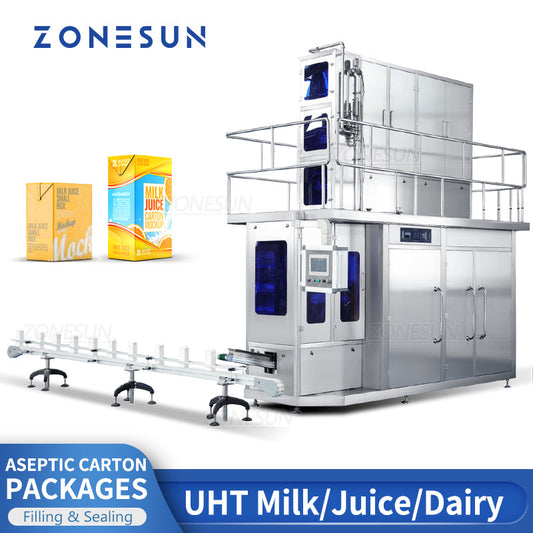
Configure a liquid bottling line around your product, bottle, closure and production target. ZONESUN systems can integrate bottle feeding, cleaning, liquid filling, cap feeding, capping, sealing, labeling, coding and finished-bottle collection into one coordinated line.
From Empty Bottle to Finished Product
Liquid products differ in viscosity, foaming behavior, chemical composition and filling accuracy requirements. The filling technology, product-contact materials, nozzle design and downstream equipment should therefore be selected around the actual product and package.
Gravity, flow-meter, magnetic-pump or other suitable fillers for water, juice, wine, vinegar, cosmetic water and similar liquids.
Controlled-speed or bottom-up filling systems for detergents, hand soap and other products that may foam during filling.
Pump or piston filling configurations for edible oil, cosmetic oil, lubricant and other liquids requiring controlled product transfer.
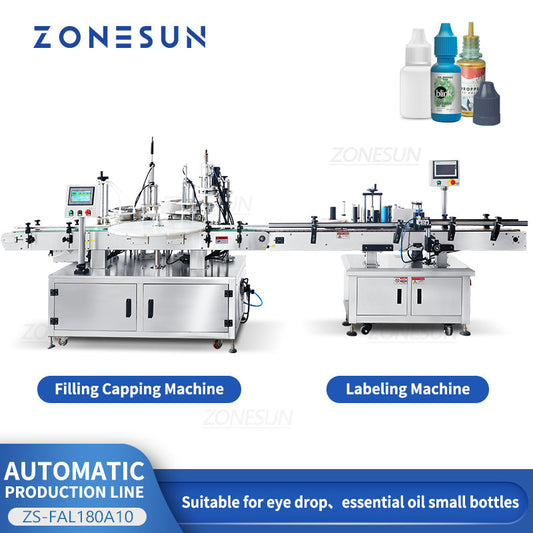
Space-saving systems combining filling, plugging, capping and labeling for smaller containers and flexible production batches.
| Filling Method | Suitable Product Type | Typical Advantage | Important Consideration |
|---|---|---|---|
| Gravity Filling | Free-flowing, water-like liquids | Simple structure and efficient filling | Best suited to consistent low-viscosity products |
| Flow-Meter Filling | Liquid foods, oils and daily chemical liquids | Electronic volume measurement and adjustment | Meter type must match the product |
| Pump Filling | Low- to medium-viscosity liquids | Flexible pump selection for different products | Pump and contact materials require confirmation |
| Piston Filling | Viscous liquids and selected paste-like products | Controlled volumetric dosing | Cylinder and valve must match viscosity and particles |
| Peristaltic Filling | Small-volume, clean, free-flowing liquids | Product mainly contacts replaceable tubing | Tubing size and chemical compatibility affect performance |
A typical line may include bottle feeding, cleaning, filling, cap feeding, capping, sealing, labeling, coding, inspection and finished product collection. The exact configuration depends on the product and package.
Selection depends on viscosity, foaming, particles, filling temperature, chemical composition, volume range and accuracy. Product samples are recommended before the filling system is confirmed.
One line may handle several compatible liquids if the filling range, pump, contact materials and cleaning requirements are suitable. Changeover procedures and product cross-contamination must be considered.
Multiple bottle sizes can often be handled by adjusting guides, nozzles, sensors and capping components. Substantially different bottles may require change parts or separate positioning fixtures.
Filling speed control, bottom-up nozzles, suitable nozzle diameter and optimized liquid supply can help reduce foam. Performance should be tested using the actual product.
Cap feeding and capping equipment can be customized for screw caps, pump heads, spray caps, droppers, plugs and other closures. Samples or dimensional drawings are required for evaluation.
Additional capping, labeling, coding and packaging machines may be connected later when conveyor height, direction, speed and container spacing have been planned for future integration.